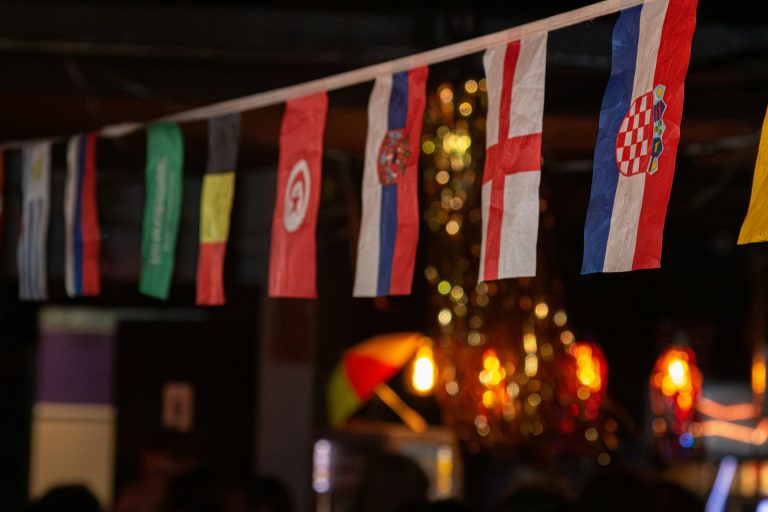
For a few weeks this month, if you drove through almost any Malaysian town, you would have seen them. Argentine flags on car windows. Brazilian jerseys at the mamak. A Spanish scarf in a kampung that has never been within 6,000 miles of Madrid.
Malaysia did not qualify for the recently concluded Fifa World Cup. We flew the flags anyway.
On July 20, Spain beat Argentina in the final to lift the trophy, and across the country, people who have never left Malaysia felt the joy – or the disappointment – of a team from a place they may never visit.
Sit with that for a moment. It is one of the stranger things we do, and one of the most human.
Psychologists have a simple name for part of it: basking in reflected glory. In a series of studies in the 1970s, social psychologist Robert Cialdini and his colleagues observed that supporters say “we won” when their team wins, and “they lost” when it does not. Victory is shared. Defeat is kept at arm’s length. We borrow the glow of something larger than ourselves and, for a while, it warms us as though we had earned it.
But reflected glory is only the surface. Beneath it lies something deeper and much older – the need to belong.
We are built for it. Long before nations or football, we lived in small groups that survived only by staying together. Our brains still reward the feeling of belonging with something close to joy. A shared team, a shared flag, a shared 3am kick-off – these are modern ways of satisfying a very old instinct. The team does not have to be ours. The belonging is.
And that is why, this year, the instinct is worth pausing on.
We are living through the most connected and the loneliest moment in human history at the same time. Our screens have given each of us a private world, shaped by algorithms for an audience of one. We scroll alone, together. In that landscape, the World Cup remains one of the last great campfires – a rare event that millions of strangers watch together, experience together and debate together the next morning. For 90 minutes, everyone shared the same feed.
Notice what actually creates that sense of belonging, because it is almost the opposite of how most of us try to manufacture it.
First, it is shared, not sold. Nobody was told to care. The caring came first, and everything else – the jerseys, the flags, the arguments – followed. Belonging cannot be imposed from above. It can only be offered and then freely chosen.
Second, it needs genuine stakes. A match matters because it can be lost. Remove the risk and the magic disappears. We feel most connected to the things that have the power to break our hearts.
Third, it lives in ritual, not information. Staying up late, ordering the same drink at the same stall, groaning at the same replay. Belonging grows from the things we do together repeatedly, far more than from the things we are told.
So what is the lesson for those of us who lead anything – a company, a team, a cause or a country?
We tend to misunderstand the psychology of belonging.
We try to announce belonging. We paint values on the wall, launch campaigns and circulate memos about culture. Then we wonder why none of it resonates. Meanwhile, a football team on the other side of the world, which has never sent us a single message, commands a devotion no corporate slogan could ever inspire.
The difference is not money. It is that the team offers something real to belong to and allows people to choose it freely, through shared stakes and shared rituals.
Three lessons follow for anyone trying to build the genuine article.
First, give people something larger than themselves – and mean it. Not a slogan, but a purpose with real stakes, something that can genuinely succeed or fail, and whose outcome matters. People do not rally around safe ideas.
Second, build rituals, not announcements. The regular gathering, the shared meal, the small repeated act that quietly says: you are one of us. Belonging is a habit before it becomes a feeling.
Third, let it be chosen, never demanded. The fastest way to destroy belonging is to require it. Offer the flag. Do not force the salute.
There is also a gentle warning embedded in all this. The same instinct that allows us to borrow a distant nation’s joy can also be exploited by anyone who learns to offer a flag and a sense of “us versus them”. The instinct itself is neutral. It can unite a community or divide one. What matters is who is holding the flag – and why.
But in the early hours of Monday, July 20, watching a country most of us have never visited win a match we were not even playing, it mostly felt like the better version of that instinct. It was a quiet reminder that beneath our scattered, solitary screens, we remain creatures who long to belong to something – and to experience it together.
Malaysia was not in this World Cup. We flew the flags and wore the jerseys anyway.
Perhaps the flag was never really the point. The belonging was.
Ts Dr Manju Appathurai holds dual PhDs in Artificial Intelligence (2026) and Crisis Economics, is a licensed clinical psychologist and Licensed Technologist (Ts), and is the founding principal of Mahat Advisory and a strategic adviser to the Dutch Coalition for Defence and Security (Malaysia).
The views expressed here are the personal opinion of the writer and do not represent those of Twentytwo13.