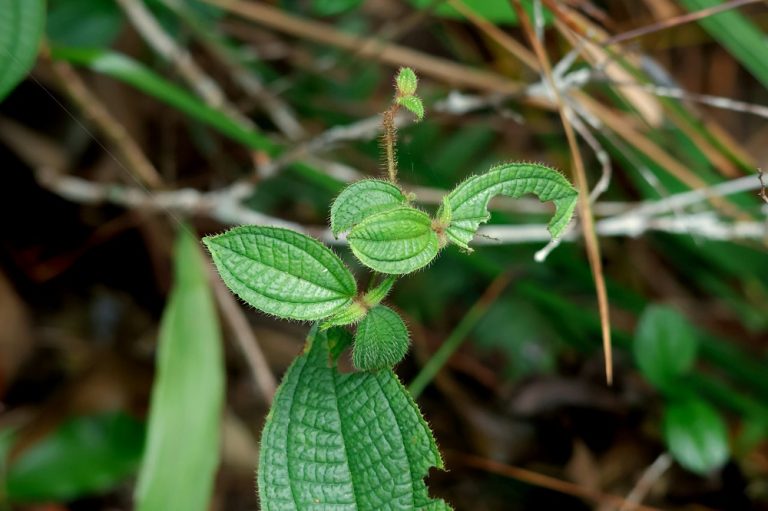
A piece of bark may look unremarkable. In a Universiti Malaya (UM) laboratory, however, it can mark the start of a search for compounds with unusual chemical structures and biological properties.
Following these clues can take researchers from identifying a plant to investigating questions relevant to human health.
This work is central to the International French Malaysian Natural Products Laboratory (IFM NatProLab), which connects UM researchers with scientific partners in France.
At the Department of Chemistry, Faculty of Science, UM, Associate Professor Dr Liew Sook Yee, Dr Muhamad Aqmal Othman, Dr Syazreen Nadia Sulaiman and the writer continue to investigate Malaysia’s natural products.
As UM marks 121 years since its establishment, the department’s plant chemistry research shows how a scientific legacy can be preserved while continuing to evolve.
For nearly four decades, UM researchers have explored the chemical diversity of Malaysian plants, from collecting and identifying specimens and isolating natural products to applying modern analytical technologies and pursuing international collaborations. Generations have changed and technologies have advanced, but one question continues to drive the work: what chemical secrets remain hidden within Malaysia’s biodiversity?
A 2026 study in the Journal of Natural Products, co-authored by the writer and international colleagues, illustrates this work. Researchers isolated nine compounds from the bark of Fissistigma litseifolium, including three previously unreported natural products. One compound, fissistidin, inhibited KPC-2, an enzyme that helps bacteria resist certain antibiotics. The laboratory finding warrants further investigation but does not establish a treatment for people.
Behind such research lies a quieter resource: more than 4,000 plant specimens preserved in a herbarium at UM’s Faculty of Science. Dried leaves, flowers and stems provide reference material that researchers can use to establish a plant’s identity before investigating its chemistry.
At IFM NatProLab, researchers extract substances from plant material and separate the resulting mixtures into simpler components. They then determine the structures of individual compounds and investigate their biological properties through appropriate studies. Each stage addresses a different question about the material.
The work demands patience. An interesting compound may be present in only minute quantities, and obtaining enough pure material for further analysis can take months. Less promising results also have value, helping researchers decide where to direct subsequent experiments.
The team uses modern analytical techniques to support dereplication – the early recognition of known compounds. Liquid chromatography-tandem mass spectrometry (LC-MS/MS) generates molecular fragmentation patterns, while molecular networking groups similar patterns into a map of relationships. This helps researchers identify potentially related compounds and prioritise those for isolation. Further analysis is still needed to confirm their identities.
A 2024 study in the Journal of Natural Products by S. Yaallini Sukumaran, UM colleagues and research partners illustrates this approach. LC-MS/MS and molecular networking guided the isolation of compounds from Neo-uvaria foetida bark, including three new compounds. Several showed activity against the coronavirus HCoV-229E in cell experiments. These findings require further investigation before any medical application can be considered.
Interpreting the results requires training and experience. At UM, natural products research was strengthened by scientists including the late Professor Dato’ Dr A. Hamid A. Hadi, the late Associate Professor Dr Mat Ropi and Professor Dr Khalijah Awang. Alongside their discoveries, they trained researchers who now continue the work and supervise a new generation of students.
Professor Khalijah’s collaboration with France’s Institut de Chimie des Substances Naturelles (ICSN) developed over more than three decades and led to the establishment of IFM NatProLab in 2015. The partnership enables researchers to share expertise in natural products chemistry, analytical methods and experimental approaches.
Malaysian researchers contribute knowledge of tropical plants and expertise in isolating and identifying their compounds, while their French colleagues bring complementary scientific strengths. Working together allows samples and data to be examined from different perspectives, while students learn how researchers in other laboratories tackle complex questions.
The relationship between people and plants offers another starting point. Turmeric, ginger and lemongrass are familiar ingredients in Malaysian kitchens and traditional practices. Such knowledge can suggest questions worth investigating, but scientific studies are needed to assess the effectiveness and safety of specific uses.
The laboratory’s expertise gained further recognition when its research collaboration received support from France’s Centre National de la Recherche Scientifique (CNRS) through the International Research Network on Cosmetics (IRN COSMETICS) grant. The network provides a broader platform for natural products research, particularly into the potential of plant-derived compounds for future cosmetic applications. The collaboration extends the work from discovering and characterising bioactive compounds to exploring their potential applications.
IFM NatProLab also organises training sessions and workshops to introduce students and early-career researchers to current research methods. Participants can apply these skills to their own projects and share them with colleagues. In this way, international collaboration strengthens not only research capabilities but also the people who will carry the work forward.
All this research depends on natural resources remaining available for study. Responsible plant collection and respect for associated community knowledge are essential. Losing a habitat also means losing opportunities to understand the plants it supports.
For the IFM NatProLab team, Malaysia’s plants still hold many unanswered questions. Every carefully identified specimen and thoroughly investigated compound adds to a body of knowledge that other scientists can build upon. Protecting these plants today preserves the opportunity to answer questions researchers have yet to ask.
Dr Azeana Zahari is a senior lecturer at the Department of Chemistry, Faculty of Science, Universiti Malaya.