
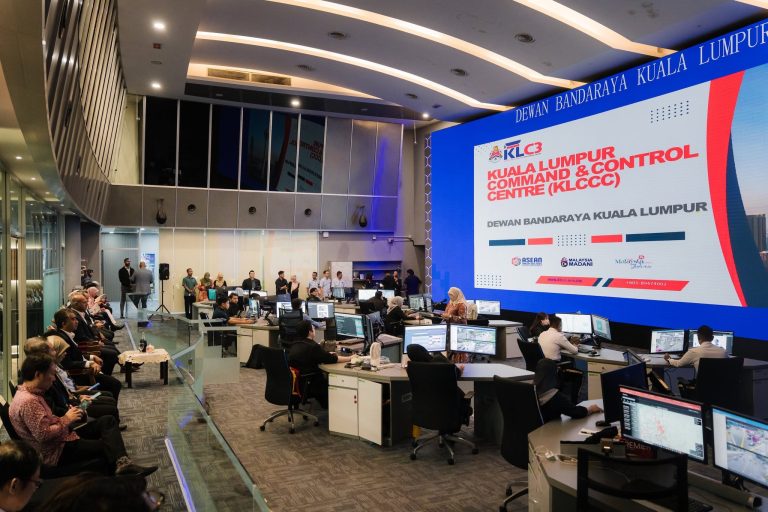
KUALA LUMPUR: Nine local authorities across Malaysia are testing artificial intelligence (AI) applications in real-world settings as the country moves towards its goal of becoming an “AI Nation” by 2030.
Responding to a question from Bakri MP Tan Hong Min in the Dewan Rakyat earlier today, Digital Minister Gobind Singh Deo said the AI City initiative, under the National AI Action Plan 2026–2030 led by AI Malaysia, builds on the existing Malaysia Smart City Framework by integrating AI, big data and digital infrastructure into local council management.
“Rather than attempting a blanket nationwide rollout from the start, the government is trialling targeted AI use cases across nine selected local councils to boost public service delivery and citizen wellbeing.”
Gobind said the nine local authorities selected for the trial were:
- Penang Island City Council
- Ipoh City Council
- Kuala Lumpur City Hall
- Petaling Jaya City Council
- Putrajaya Corporation
- North Kuching City Hall
- Jasin Municipal Council
- Johor Bahru City Council
- Shah Alam City Council
Backed by seed funding under the 5G Enterprise and AI City Grant, launched on Aug 13, 2025, the councils have rolled out 28 projects.
The projects include:
Putrajaya: Members of the public can ride a 5G-enabled autonomous electric bus.
Kuala Lumpur: Applications include digital twins, data analytics, smart tree inventory monitoring and AI-based road asset mapping.
Johor Bahru: Initiatives focus on public safety and logistics, including autonomous urban transport, drone-based AI traffic monitoring and AI-enabled CCTV surveillance. The systems provide police with real-time video to support criminal investigations and responses to road accidents, particularly in flood-prone or heavily congested areas.
Kuching: The city operates an Integrated Smart City Platform alongside a centralised data lake, smart tree management and real-time traffic violation detection.
George Town and Ipoh: Both cities are implementing AI-powered traffic management systems.
Early results include a 10 to 15 per cent reduction in traffic congestion in Penang following the introduction of AI traffic management technology.
In Ipoh, smart traffic-light synchronisation has reduced delays at peak-hour bottlenecks from two minutes to 40 seconds.
Gobind said the initiative did not mean all 156 local councils nationwide would have to develop their own AI systems.
“The Digital Ministry is building a centralised data platform that includes a shared AI Algorithm Bank and AI Marketplace.
“Under the principle of ‘Build Once, Reuse and Scale’, AI applications tested and proven in the nine pilot locations will be shared across all councils, allowing smaller authorities to adopt proven technology based on local needs and data readiness.”
The government also plans to establish a National Command Centre (NCC) to consolidate multi-agency data into a single display, using AI analytics and real-time digital twins.
The initiative aims to move towards a “Thinking City” model, in which urban environments can predict risks, test scenarios and intervene before problems escalate.


