
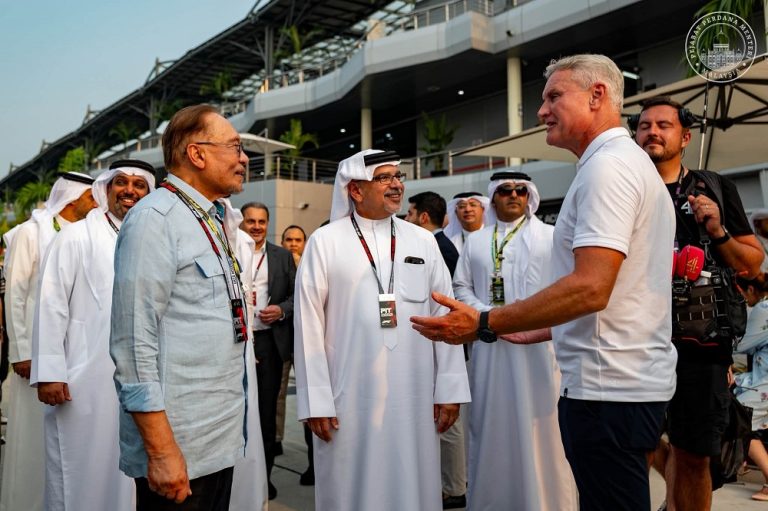
KUALA LUMPUR: The Sepang International Circuit (SIC) saw record-breaking attendance when it hosted the Bahrain Grand Prix over the weekend. Official figures showed that 261,000 people attended over the weekend, with 103,000 on race day.
For some who flocked to the grandstands, the return of F1 to Malaysia was sentimental. It was a chance to relive an era when the Malaysian Grand Prix was part of the F1 calendar from 1999 to 2017.
For others who braved the erratic weather and transportation chaos at Sepang, attending the race provided bragging rights and plenty of content for their social media accounts. It was also perhaps a way to quell their fear of missing out.
But for the decision-makers in the Perdana Suite, including Malaysia’s King Sultan Ibrahim, Sultan of Brunei Sultan Hassanal Bolkiah, Bahrain’s Prime Minister Prince Salman Hamad Al Khalifa and his Malaysian counterpart Datuk Seri Anwar Ibrahim, it provided a space to discuss trade, the economy and strengthening diplomatic ties.
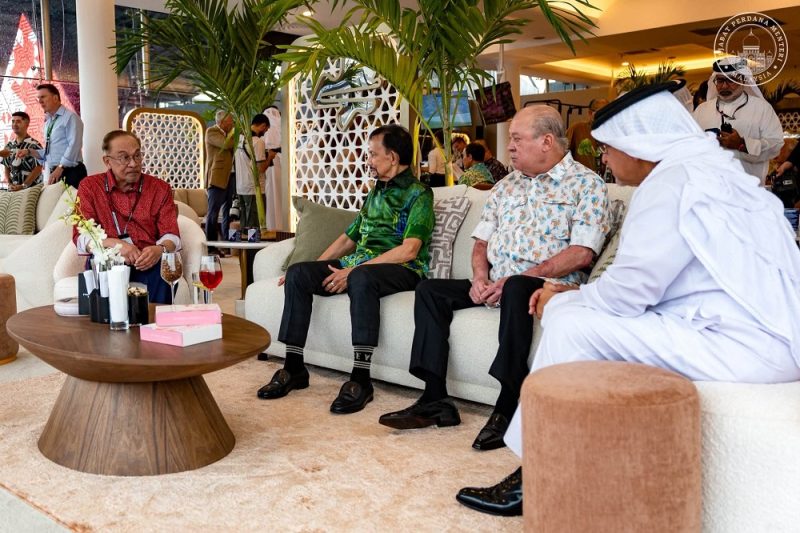
Anwar (left) joined by Sultan Hassanal Bolkiah, Sultan Ibrahim and Prince Salman in the Perdana Suite. Image: Prime Minister’s Office, Malaysia
Other prominent royal guests in attendance included the Raja Muda of Selangor, Tengku Amir Shah Sultan Sharafuddin Idris Shah; the Tunku Mahkota of Kedah, Tunku Shazuddin Ariff Sultan Sallehuddin; and the Tengku Mahkota of Kelantan, Tengku Muhammad Fakhry Petra.
This is sports diplomacy.
Global Peace Institute, London, senior fellow Prof Dr Mohd Mizan Mohammad Aslam reportedly said Malaysia had demonstrated how global sporting events could be used not only to entertain the public but also to strengthen international relationships, generate economic activity and create a sense of shared national excitement.
He was quoted as saying: “Sport had therefore created a diplomatic platform. Leaders met, bilateral relations were reinforced and Malaysia was placed before a global audience not through a formal summit but through one of the world’s most recognisable sporting spectacles.”
Such a diplomatic platform is not new. In fact, Malaysia has seen the impact of sports diplomacy over the decades.
In a bid to reinforce Malaysia’s position on the world map, Tun Dr Mahathir Mohamad, during his first tenure as prime minister, accelerated the nation’s progress and growth, which saw the construction of the Sepang International Circuit and the National Sports Complex in Bukit Jalil, among others.
Such infrastructure, accompanied by the construction of the Petronas Twin Towers, LRT lines and highways, was designed to complement the hosting of the 1998 Commonwealth Games in Kuala Lumpur, followed by subsequent sporting events such as the SEA Games, F1 and MotoGP.
Such events served as crucial platforms for the young Southeast Asian nation to impress the world with its progress and infrastructure. It was also during such events and at dinners that conversations about economic opportunities and trade were raised in a more relaxed manner. They also cemented relationships among communities and nations.
Beyond the F1 race in Sepang, another iconic sporting event took place some 60km away over the weekend. In the heart of the city centre, amateur runners and even members of the Kedah royal family – Tunku Shazuddin Ariff and the Tunku Puan Mahkota of Kedah Che Puan Nur Julie Ariff – participated in the event on Oct 3.
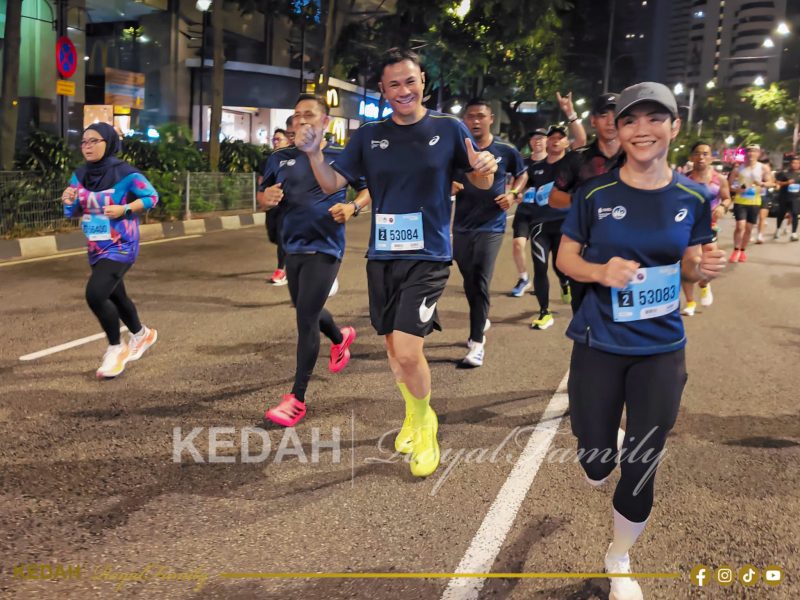
United through a common cause, sport provides an opportunity for members of the royal family and other Malaysians to connect. That is also a form of diplomacy.
Given the geopolitical tensions, particularly in the Middle East, stability in the Southeast Asian region provides nations with an outlet to connect, reaffirm commitments and discuss growth. Having hosted the Asean Summit last year, Malaysia has often referred to itself as the gateway to the region.
But what Malaysia truly needs is a structured sports diplomacy game plan. When asked recently about its sports diplomacy initiatives, the Youth and Sports Ministry provided a superficial answer. There was no depth or grand plan.
According to the Youth and Sports Ministry, its sports diplomacy efforts include:
i. Strengthened bilateral sports cooperation: The ministry facilitates cooperation with other countries through ministerial meetings, official visits, MoUs and technical exchanges. For example, in February 2026, the ministry received Indonesia’s Youth and Sports Minister to discuss stronger Malaysia-Indonesia cooperation in youth and sports, including the possibility of a new Memorandum of Understanding (MoU).
So what was discussed? How will Malaysia-Indonesia cooperation be strengthened? What is the content of the new MoU? Do we really need more MoUs instead of engineering real on-the-ground initiatives?
ii. Supported cooperation involving sports science, sports medicine, high-performance training, athletes and coaches.
That is another one-liner without much substance.
iii. Used Asean platforms to build regional relations, with the upcoming 2027 SEA Games and Asean Para Games described as “particularly significant”.
If so, what are the plans? What initiatives or activities will strengthen regional relations among Southeast Asian nations? Will the ministry include its counterparts from other ministries to advance conversations on trade, the economy, technology and climate, among other areas?
When pressed for more details, there were no forthcoming answers.
Sports diplomacy is as important as the sports industry, and the two go hand in hand. Sports offer plenty of returns and opportunities. More importantly, they provide a platform to bring people together.
The 2027 SEA Games and Asean Para Games should be more than just winning a record number of gold medals. They should be an opportunity for leaders to come together, work on realistic initiatives and move forward as a region.
Setting the right sports diplomacy template could set the ball rolling for future hosts to embark on similar initiatives, ensuring that conversations are not forgotten at subsequent editions.
The ball is now in Malaysia’s court.


