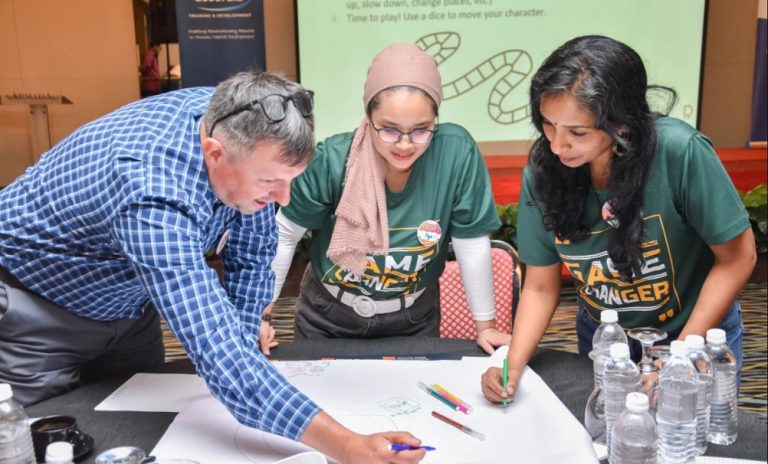
Games are not only for children. They help adults explore complex ideas and emotional responses in a controlled environment.
That is the idea behind the fourth Malaysian Simulation and Gaming (Masaga) Conference at The Everly Putrajaya Hotel in Malaysia’s administrative capital from Oct 22-24.
The first Masaga was held in 2018, followed by the second one a year later. The Covid-19 pandemic meant the conference was on hiatus between 2020-22 but resumed last year.
“This year’s theme is ‘Play to Learn’, as the conference will centre around making learning fun and structuring the process to encourage self-discovery,” said one of the event organisers, M. Jegatheeswaran.
“The idea is to see how playing games can test a person’s knowledge and competency, including their emotional response.
“After each game, there is a debrief to discuss their decisions as they reflect on how and why they made those decisions.”
He said the programme is ideal for corporate trainers, school teachers, lecturers, game designers, public policy researchers, and human resources practitioners.
He mentioned that one of the presenters, Khairul Hisham Jamalludin, an English Language teacher at Universiti Malaysia Perlis, has been using board games and simulation activities to help students get a better grasp of the language.
Khairul Hisham will speak about ‘Tabletop Role Playing Game (RPG) as an Educational Tool’ during the conference.
“For some, learning can be boring and tedious. So, Khairul uses RPG to get his students excited by creating laughter and adventure. They learn new terms and words while having fun,” said Jegatheeswaran, who will speak about ‘Connecting game mechanics to learning objectives’ during the conference.
Jegatheeswaran said an example of a simulation that will happen on the second day of the conference centres around the theme of Hong Kong gangsters, which will challenge participants to navigate moral dilemmas, leadership, and cooperation, all while examining the ramifications of their choices.
“Ours is a hands-on, fun conference which features case study conversations where we discuss and act out how something happened and why it happened,” he said.
“We don’t question morality in the same way we do in real life. We sometimes put people in difficult situations where they have to make hard choices.
“We then discuss those choices in a safe, non-judgmental environment. We can learn so much about ourselves.”
Jegatheeswaran revealed he recently played a game of Monopoly with his children, using modified rules that allowed the players to attack each other and steal property.
He was shocked that his children were willing to do all sorts of things to take away someone else’s property. When he asked them if they felt bad about doing so, they replied: “We are only following the rules of the game.”
“So, I put on my trainer’s cap and wondered what it would be like to put people in such a scenario during the conference. Would they feel compelled to break the law if the rules of the game allowed it?” he added.
Jegatheeswaran said those who engage in board or simulation games are more accepting of one another, and there is a calmer, more inviting atmosphere.
“Because we meet face to face, we are more cordial and friendly. There is a sense of camaraderie, which I find is missing when playing online games.
“Don’t get me wrong, the online community is strong, but there are some who, when they are anonymous and behind screens, are rude and aggressive.
“Face-to-face gameplay encourages empathy and respect.”
For more details, visit https://www.ticket2u.com.my/event/36666/malaysian-simulation-gaming-conference-2024-(masaga)