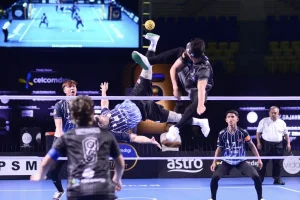
Malaysia’s Budget 2023, which was tabled in Parliament this evening, saw sports receiving a RM399 million allocation.
There were some wins – namely in using sports as a tool to promote unity, the welfare of athletes, and tax breaks for sponsors of grassroots sports programmes.
However, there is a lack of clarity over how much will be spent on preparing national athletes for the upcoming international competitions, and to maintain infrastructure, nationwide.
Prime Minister cum Finance Minister Datuk Seri Anwar Ibrahim, in the Dewan Rakyat, revealed that:
i. RM20 million will be allocated for sports, culture, and arts programmes at the school and community levels, for youths.
ii. RM50 million in matching grants will be handed out to encourage private sector sponsorship for sports programmes, especially those based on unity, organising competitions at the national level, and sports reality programmes.
iii. RM324 million will be used to develop the sports ecosystem, comprising talent search, to high-performance elites and para-athletes, and to maintain and upgrade sports facilities throughout the country.
iv. Tax deductions of up to 10 per cent of aggregate income for individuals or companies that contribute to non-profit organisations that implement sports development programmes at the grassroots level.
iv. RM5 million will be given to the National Athletes Welfare Foundation (Yakeb).
However, the main point of contention is the bulk of the allocation – the RM324 million that has been allocated for talent identification, elite athletes, and para-athletes, and the upgrading of facilities. Anwar did not provide a breakdown of how the RM324 million would be spent.
Veteran sports administrator, Datuk Dr Ramlan Aziz, agreed that the government ought to be more specific on how the money will be used.
“How exactly is the RM324 million going to be divided? How much is for talent search and high performance, and how much is for maintaining and upgrading sports facilities?” asked Dr Ramlan, who is the former National Sports Council director-general and National Sports Institute chief executive officer.
“Also, the RM20 million for schools and community events, while fantastic, could be shared with the Education and National Unity ministries.
“You could do talent spotting at these community and school events, too. So, there could be an overlap,” he added.
The amount may not go down well among the stakeholders, who are preparing their athletes for the upcoming SEA Games in Cambodia (in May), the Asian Games in China (September), followed by the Olympics and Paralympics next year.
The Olympics qualifying rounds for most sports will begin in April.
Dr Ramlan, however, appreciated the government using sports to unify the people, and hoped that the RM50 million in matching grants will be used as it would mean more private entities getting involved in sports.
The national budget that was tabled by the previous government, before the Nov 19 General Election last year, saw RM154 million set aside for the development of a comprehensive sports ecosystem, which involved identifying new talents and training programmes.
Another RM145 million was allocated for the maintenance, upgrading and construction of sports facilities, while RM20 million was for the construction of drag strips in the country – a move criticised by many.
That budget also saw RM13 million being allocated for eSports, RM12 million for para-sports, and RM5 million for Yakeb.
The sports fraternity cried foul after RM289 million was set aside for sports in Budget 2022. However, in February 2022, the Cabinet approved a further allocation of RM240 million for the Podium Programme – a programme for the nation’s elite athletes – from 2022-2025.