SUBANG JAYA: For world-renowned Odissi dancer and choreographer Datuk Ramli Ibrahim, dance is about far more than movement. It is a pathway to beauty, self-discovery and transformation, especially for young people taking their first steps onto the stage.
Speaking to Twentytwo13 during a recent Odissi performance featuring 20 children from Klang, Selangor, Ramli reflected on what he sees in young dancers and why the experience matters.
“What I see is the connection with something beautiful,” said Ramli, chairman of Sutra Foundation.
“I think there’s something inherent in all of us – a desire to do something magical.”
Ramli said he is pleased to introduce children to Indian classical dance, though he believes the same desire for beauty and meaning could emerge through many different forms of expression.
“It could have been painting, literature, or something else entirely, but because my area is Indian classical dance, I want to instil in them a little more depth.”
His connection with children, he said, comes naturally.
“Children connect with me; animals connect with me. I have a strong sense of sincerity and compassion for children and animals.”
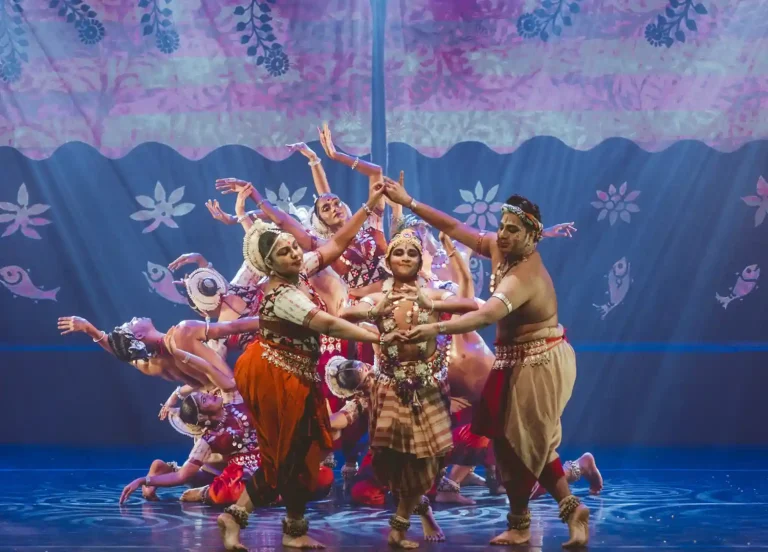
Odissi Anjali showcased 20 young dancers from Klang’s Raas Leela Performing Arts who trained under the Sutra Foundation’s Dance Outreach Programme.
The performance was far more than an evening on stage. It reflected the transformative power of arts education by providing young people with a platform to develop discipline, confidence, creativity and cultural awareness while highlighting the need for greater arts opportunities beyond Kuala Lumpur.
Among the young dancers who embody that connection is 13-year-old Ashikar Raj, who stood out in Sutra’s recent weekend Odissi performances not only as a male dancer in a sea of female faces but also as one of the most promising young talents emerging from the programme.
Ashikar has no qualms about being a male dancer. Articulate and confident, he is clear about what he wants to achieve and is already heeding what he describes as his calling in life.
“For one so young, he possesses a remarkable sense of self. Comfortable in his own skin and moving with a natural sense of freedom, Ashikar understands that dance is not simply an activity but a means of self-expression and growth,” said Ramli.
“He is passionately and inherently drawn to dance and is acutely aware of the empowerment and joy it brings as he discovers and fulfils his artistic potential. Following his own bliss, he remains unfettered by the stereotypes that some may still associate with boys who choose to dance.”
When asked whether grace or discipline is more difficult for 13-year-olds to learn, Ramli pointed to what first drew him to Odissi.
“In Odissi there’s a kind of lyricism. That’s what you call grace, isn’t it?”
He believes the dance form resonates particularly well with people in this region.
“Malaysians have that quality. It’s a very graceful culture.”

Ramli sees his work as something deeper and more instinctive.
Ramli contrasted Odissi with Bharatanatyam, another classical Indian dance form.
“I have a very strong predilection for Odissi compared with, say, Bharatanatyam, which is very angular. Odissi is like a wave,” said the 73-year-old.
For him, that flowing quality reflects something broader about the culture of this part of the world.
“I think that, for many people in this part of the world, there is a natural grace. People are not so aggressive. I suppose that’s my take on it.”
For parents wondering whether the effort, training and nerves are worthwhile, Ramli’s answer lies in the transformative power of performance itself.
“One has to look at the empowerment of the children because performing is not easy. It’s very frightening.”
He describes stepping onto a stage as a profound test of character.
“I often say that performing can be a trial by fire. You have to go through it; otherwise, you don’t truly believe in yourself.”
The process, he explained, reveals something important.
“That belief in your own potential emerges during a performance and, when it’s over, you are transformed.”
For Ramli, this transformation is especially powerful when rooted in an art form with depth and substance.
“I think performances are transformative, especially in Indian classical dance or in music – something that really has substance.”
After decades of performing and teaching, Ramli was asked what question about dance he wished someone would ask him.
Instead, he reflected on the questions he finds hardest to answer.
“It’s very difficult for me to answer questions such as, ‘What is your ambition?’ or ‘How would you like to be remembered when you’re gone?’“
The reason is simple.
“I can’t answer those questions because I don’t have a specific ambition, so to speak. Nor do I spend time thinking about how people should remember me after I’m dead.”
Rather than pursuing a defined ambition or legacy,
“I think I’m doing something that I am compelled to do. Something from deep within tells me what I have to do, and I’m simply following my bliss.”
Main image: Ashikar Raj (middle) was part of the Odissi Anjali that showcased 20 young dancers from Klang’s Raas Leela Performing Arts who trained under the Sutra Foundation’s Dance Outreach Programme.