
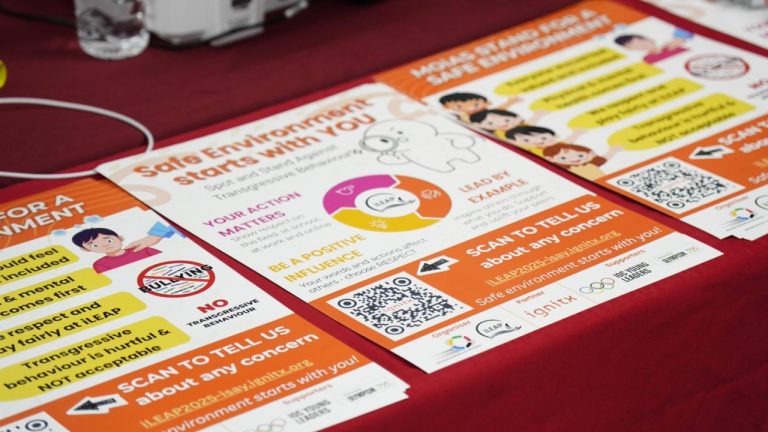
KUALA LUMPUR: Inclusive Leadership Programme (iLEAP) founder and director Tania Lee knows firsthand how difficult it can be to respond to harassment when there is no clear avenue for help.
Lee said her own experiences of harassment left her unsure of where to go or who to turn to – a gap she now hopes to address through stronger safeguarding practices, particularly for young people.
Today, through iLEAP, Lee advocates the importance of safeguarding, stressing that youths must understand what it means to live in a safe environment and, crucially, how to take action when they do not feel safe.
This was evident during the recent iLEAP programme organised by the Malaysian Olympism in Action Society, held from Dec 20 to 22 at the International Youth Centre in Bandar Tun Razak. Safeguarding was not only addressed in theory, but practical safety nets were also established to protect the 37 young participants from Malaysia and abroad.
Lee said the initiative could serve as a useful case study as Malaysia prepares to host the SEA Games in 2027.
“Our programme is inclusive, and we also have differently abled participants,” she said.
“They shared their challenges, and sometimes they are told by parents to simply ignore harassment.”
“There can be physical and verbal harassment. We have a Safe Sport Code for athletes, but the question is: what are the proactive, immediate steps? What must be done to ensure young athletes and those involved in sport are able to act when they don’t feel safe?”
Beyond discussions on safeguarding, Lee said posters containing reporting pathways via QR codes were placed at strategic locations throughout the International Youth Centre. These allowed participants and speakers to raise concerns should they feel unsafe.
An independent group, separate from the organisers, was tasked with handling any complaints lodged.
“I’m glad we didn’t have a single report,” Lee said.
“The main idea was to provide an avenue so participants felt safe.”
She added that some parents had raised concerns about safety following recent criminal incidents involving children in schools.
“These concerns are legitimate and real,” she said.
“So we set this up to reassure parents and guardians by putting safety nets in place. This can be done easily at sporting events or even in schools.”
Lee stressed that safeguarding must go beyond conversation and be supported by concrete action.
“We will continue to further develop our safeguarding component. It’s not the only component we focus on in iLEAP, but it is something we take very seriously,” she said.
“This is a stepping stone towards establishing more structured safeguarding frameworks.”
Anchored on four core modules – social competency, sport values, healthy living and life skills – the programme featured interactive sessions exploring the Olympic and Paralympic movements, inclusive communities through sport, leadership through lived experience, sustainability and personal growth.
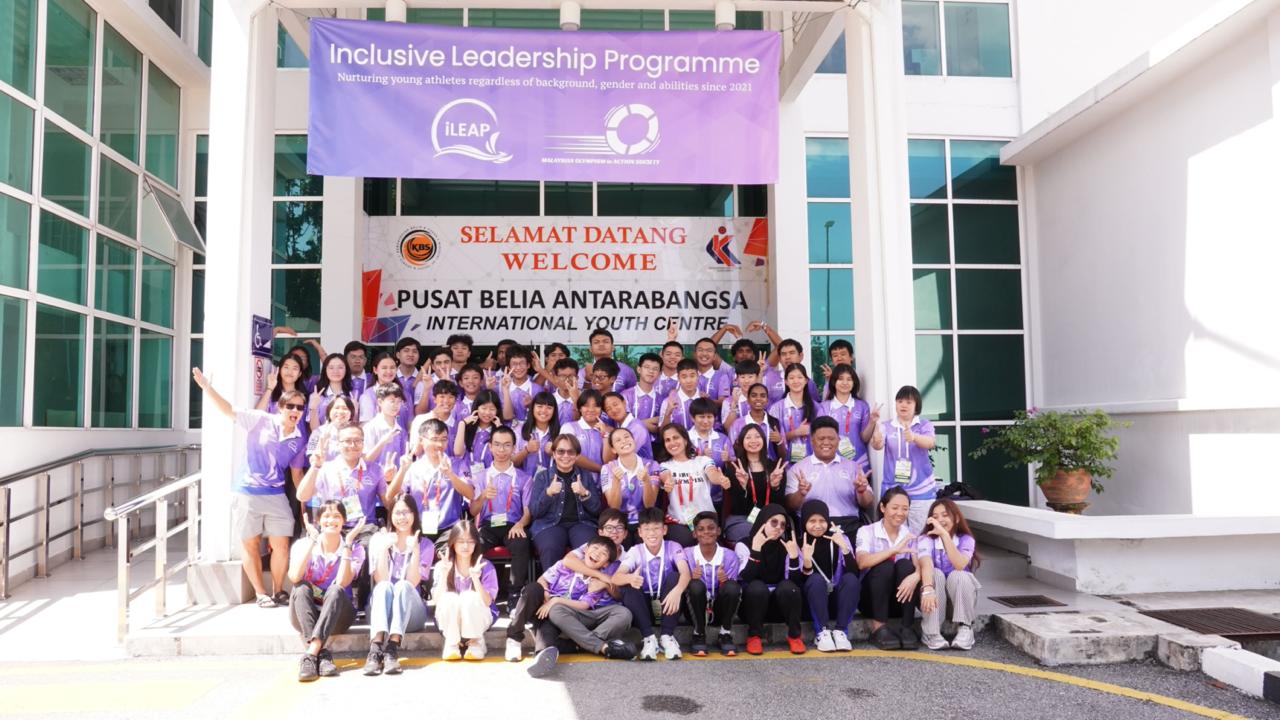
Participants at last month’s iLEAP.
Participants were also introduced to the United Nations Sustainable Development Goals, examining how sport and youth leadership can contribute to positive social and environmental impact.
The programme extended beyond the classroom with a visit to the Discover Muay Thai gym, where participants experienced an introductory Muay Thai session – many for the first time – gaining insight into how sport can build confidence, discipline and resilience.
Participants were further inspired by Olympian Noraseela Mohd Khalid and Malaysian winter sports athlete Aruwin Salehhuddin, whose stories encouraged them to pursue unconventional dreams with courage and belief.


