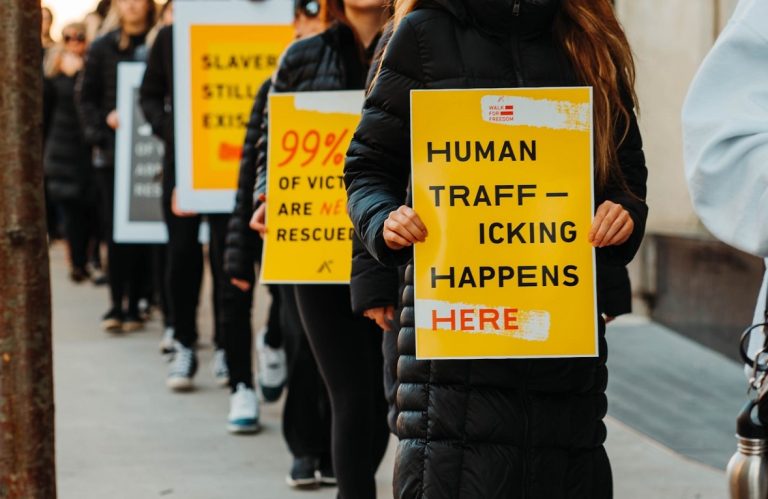
Human trafficking for forced criminality refers to the exploitation of victims through coercion or deception to engage in criminal activities for economic gain or other benefits to traffickers.
This includes individuals forced to become online scammers, drug mules, money mules, or even those coerced into terrorism-related activities.
Currently, Section 2 of Malaysia’s Anti-Trafficking in Persons and Anti-Smuggling of Migrants Act 2007 (ATIPSOM) does not explicitly define forced criminality as a form of exploitation. However, the phrase “any unlawful activity” within the act could encompass exploitation through forced criminality.
Nevertheless, amendments and clarifications within ATIPSOM are necessary, given the increasingly sophisticated nature of crimes, including the integration of technologies such as artificial intelligence (AI) in organised crime operations.
One of the most prominent forms of trafficking in Southeast Asia, and particularly Malaysia, over the past three years is the coercion of individuals into large-scale financial fraud operations, often involving cybercrime such as online scams, extortion, and money laundering.
Recently, Bukit Aman’s Criminal Investigation Department (Intelligence and Operations) deputy director, Datuk Fadil Marsus, said the Royal Malaysia Police had successfully rescued 504 Malaysians from Thailand, Myanmar, Cambodia, and other countries from becoming victims of forced criminality.
However, only about 10 per cent were confirmed as actual trafficking victims, while the majority were individuals who had voluntarily engaged in scamming activities but later sought rescue after facing threats or abuse for failing to meet profit targets. Some even acted as recruiters, luring fellow Malaysians into overseas scam operations. These individuals reportedly refused to cooperate with authorities upon returning home.
This alarming trend occurs in both legal and illegal locations such as casinos, hotels, entertainment centres, and premises officially registered as businesses. Many of these operations take place in enclosed or guarded facilities where victims are confined and forced into cybercrime activities like international financial fraud.
Criminal syndicates exploit the vulnerabilities of their victims, particularly those who fall for lucrative job offers abroad. However, there are also individuals who initially join these syndicates voluntarily, only to find themselves trapped in exploitation and abuse when they fail to meet financial targets set by their handlers.
Two distinct scenarios emerge from this issue. First, individuals who were deceived and became victims but later transitioned into recruiters or agents. These individuals may have initially been tricked or coerced into becoming scammers but, after witnessing the lucrative earnings from scamming, chose to remain and actively participate in syndicate operations. Second, individuals who were misled by legitimate job offers but were later forced into online fraud with no means of escape from the cycle of exploitation.
Under ATIPSOM, identified human trafficking victims are eligible for Temporary Protection Orders and may be placed in government-run shelters for 21 days while investigations are conducted. Malaysia currently operates 10 shelters housing trafficking victims, both Malaysian and foreign nationals. These shelters provide psychosocial, spiritual, educational, and physical rehabilitation programmes.
Programmes run by the Women, Family, and Community Development Ministry, alongside various non-governmental organisations, place great emphasis on the mental wellbeing of victims, taking into account the trauma they have endured.
However, specialised programmes are needed for victims of forced criminality, as their experiences and trauma may differ from those who have been exploited for sex or labour. In this context, psychosocial support programmes can be conducted at victims’ homes or in designated safe locations, should they choose not to stay in shelters. This approach could facilitate their recovery and reintegration into society.
Despite regional efforts to combat forced criminality, three major challenges persist. Firstly, the conceptual confusion surrounding human trafficking, where many still limit its definition to forced labour and sexual exploitation, despite global recognition of criminal exploitation as a form of trafficking.
Secondly, the difficulty in investigating and prosecuting perpetrators. Criminal syndicates operate across borders with complex structures and advanced technologies, making it challenging for law enforcement agencies to take legal action against them.
Last but not least, the lack of strong international legal cooperation. Although Malaysia is a participant in the “Bali Process,” effectively tackling this crime requires stronger cross-border collaboration, including mutual legal assistance in criminal investigations and extradition agreements.
In conclusion, addressing the issue of forced criminality demands an integrated approach that combines enhanced law enforcement efforts, a deeper understanding of the dynamics of trafficking for criminal exploitation, and strengthened international cooperation.
Only through these combined efforts can Southeast Asia break the chains of forced criminality and curb this growing threat.
Dr Haezreena Begum Abdul Hamid is a criminologist and senior lecturer at the Faculty of Law, University of Malaya.
The views expressed here are the personal opinion of the writer and do not necessarily represent that of Twentytwo13.