For many years, I have observed a comforting illusion – one that some political leaders are all too eager to promote. It is the idea that the nation rises and falls on their shoulders, that progress flows from their speeches, and that stability is the result of their wisdom.
It is a powerful illusion. It is also, quite simply, untrue. This nation, like every functioning nation, is not built by politicians. It is built – and continuously rebuilt – by its citizens.
Those who came before us, those who are here now, and those who will come after. In legal language, we call them citizens. In reality, they are everything.
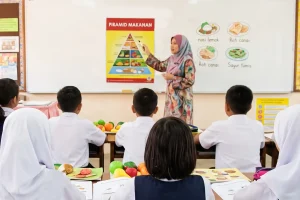
They are the civil servants who keep the machinery of government moving long after the speeches have ended. They are the teachers shaping minds in classrooms that rarely feature in policy debates. They are the healthcare workers who stand between illness and recovery.
They are the engineers, the drivers, the small business owners, the researchers, the soldiers, the police officers – and yes, the men and women who sweep our streets and clean our sewers.
Remove these people, and the nation stops. Remove politicians, and the nation adjusts. Yet, we have allowed a narrative to take root – one where political leaders present themselves as indispensable figures, as though the country exists as a stage for their performance.
Development becomes their gift. Stability becomes their achievement. Progress becomes their legacy.
If that is truly the case, why does the nation continue to function even when governments change?
The answer is far less dramatic, but far more meaningful. Nations endure because citizens endure. Systems continue because ordinary people continue to show up – to work, to build, to care – often without recognition.
I must confess that I find it increasingly irksome when some political leaders misread the citizens’ patience as blind acceptance. We are, by nature, a measured and tolerant people.
But let that not be mistaken for weakness. That tolerance exists only so long as the nation is not held to ransom – whether through incompetence, arrogance, or division.
There is also a tendency to sermonise – particularly by those who cloak themselves in moral or religious authority – in ways that underestimate the intelligence of the very citizens they seek to lead. If history is to be invoked, then let it be studied properly, not selectively quoted.
If religion is to be spoken of, let it uplift rather than divide, enlighten rather than obscure. More importantly, let us return to basics. Identify real problems. Propose real solutions. If that proves too difficult, there are, as always, other professions available.
The role of political leadership, therefore, is not to “build” the nation in the exaggerated way it is often portrayed. It is far more modest – and far more important. Political leaders are entrusted with responsibility, not royalty.
They are elected to make good laws – laws that facilitate life, not complicate it. Laws that protect liberty, not quietly erode it. Laws that provide a framework for growth rather than obstacles to it.
They are entrusted to maintain stability and order – not through fear or division, but through fairness and consistency.
They are entrusted to manage the nation’s resources – honestly, transparently, and with a clear understanding that these resources do not belong to them, but to the people.
And perhaps most importantly, they are entrusted with something increasingly fragile – the social fabric of the nation. The duty to ensure that citizens can live together without being torn apart by race, religion, or class.
This is not a small responsibility. But neither is it a licence for self-glorification.
Unfortunately, we are seeing a growing tendency among some politicians to seek adulation rather than accountability. To expect reverence rather than scrutiny. To behave less like public servants and more like feudal figures in a modern setting.
Titles grow longer. Convoys grow larger. Language becomes more grandiose. And somewhere along the way, the citizen becomes secondary.
It is a peculiar inversion. The people who sustain the nation are expected to look up, while those entrusted to serve begin to look down.
Perhaps it is time to gently correct this.
A nation is not a theatre. Leadership is not a performance. Public office is not a stage for personal glorification.
If one seeks applause, there are industries designed for that purpose. Politics was never meant to be one of them. At its best, politics is quiet, disciplined, and often thankless work. It requires restraint more than spectacle, integrity more than charisma, and service more than status.
The citizens understand this, even if it is not always loudly expressed. They are not asking for miracles. They are not demanding perfection.
They are asking for something far simpler – and far more reasonable. Make laws that help them live better lives. Maintain a country that is stable and just. Manage public resources with honesty. And ensure that they can live together in dignity, without being divided for political convenience.
That is all. It is not too much to ask. In fact, it is the very least that should be expected.
Because at the end of the day, the nation does not belong to politicians. It never did.
The views expressed here are the personal opinion of the writer and do not represent that of Twentytwo13.