Nothing tests a passenger’s patience quite like hearing that a flight has been delayed because of a technical issue. Out come the phones, followed by complaints on social media and perhaps a rant on Threads, as passengers wonder how long it could possibly take to fix whatever has gone wrong.
A friend who works as an aviation technician once explained just how seriously the industry takes safety. Even if an aircraft has been on the ground for only a few minutes, it must undergo the required checks before taking off again.
Strict procedures govern its airworthiness, and any faults must be assessed and addressed in accordance with approved procedures before the next flight. Safety, he stressed, is paramount. Nothing is taken for granted simply because an aircraft landed safely moments earlier.
As passengers, we rarely appreciate the people responsible for making those decisions. We are too busy complaining about the delay. Yet the very procedures that frustrate us are part of what makes flying safe.
Aviation safety, however, is more sophisticated than simply grounding an aircraft whenever something goes wrong.
The industry operates under strict procedures, including a Minimum Equipment List (MEL), which determines whether an aircraft can continue operating with certain equipment unserviceable and, if so, under what conditions. Such decisions are not left to someone’s confidence that everything will probably be fine.
There is a reason for this discipline. Aviation has learnt, sometimes through terrible tragedies, that human beings are fallible. Even the most experienced professionals make mistakes. Procedures exist not because people are necessarily careless or incompetent, but because experience alone cannot eliminate risk.
That got me thinking about the corporate world, where we have no shortage of policies, codes of conduct and rules governing professional behaviour. Yet, somehow, we seem willing to make exceptions for certain individuals.
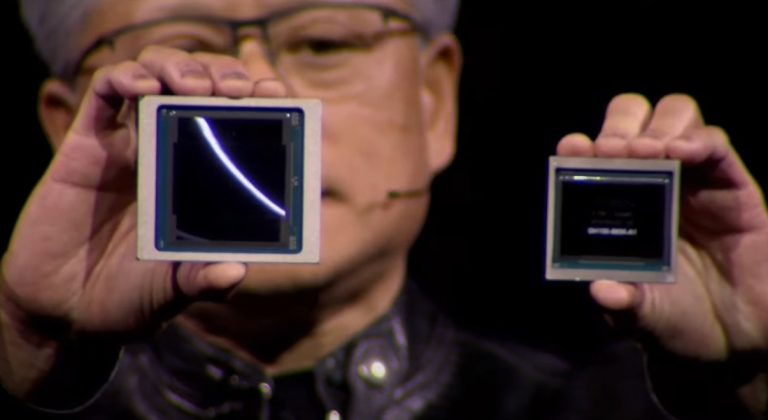
The controversy surrounding Jensen Huang (image), co-founder and chief executive officer of Nvidia, brings this uncomfortable question into focus.
For more than three decades, Huang was the driving force behind a company that became central to the global artificial intelligence boom. Under his leadership, Nvidia grew into the world’s most valuable publicly traded company.
He was admired for his technical vision and ability to anticipate the technology industry’s direction, all while remaining remarkably attached to those leather jackets that never seemed to fit quite right.
Jokes about his wardrobe aside, his achievements were extraordinary. Then came revelations about his personal relationships, raising questions about professional boundaries, conflicts of interest and potential national security risks.
On Nov 12, 2026, Nvidia announced that Huang had resigned, ending his 33-year tenure as chief executive. His private life is not my concern, and the allegations surrounding him have yet to be fully resolved.
What interests me is how success can alter the way people view someone’s behaviour, particularly when questions of professional conduct and accountability arise. We admire a leader for building something remarkable, and gradually that admiration can become a form of immunity.
An ordinary employee might face disciplinary action for breaching company policy. But what happens when the person involved is the founder, the star performer or the individual everyone believes the business cannot survive without? Do we apply the same standards, or start looking for reasons why this particular person deserves an exception?
Having spent many years in the corporate world, I have often wondered who really holds those at the very top accountable.
We have internal audits, compliance reviews and governance frameworks, and rightly so. Organisations need these safeguards. But who scrutinises the decisions and conduct of those wielding the greatest authority?
Boards have oversight responsibilities. Yet I wonder whether the same degree of scrutiny is always applied to someone regarded as indispensable to the business.
There is a concept in safety management known as the normalisation of deviance. Put simply, it describes how behaviour that would initially be considered unacceptable gradually becomes tolerated because nothing disastrous happens.
Someone takes a shortcut, nothing goes wrong, and the shortcut is repeated until it becomes accepted practice. The absence of immediate consequences is mistaken for proof that the behaviour is safe or acceptable.
I am sure many of us have seen this happen. I certainly have, although I shall spare everyone the details! It might begin with someone crossing a boundary or an organisation making an exception for an influential individual. When business results remain strong, no one feels compelled to challenge the behaviour.
This is not to suggest that we know what Huang was thinking or that the circumstances of his case necessarily followed this pattern. But power and success can create an environment in which individuals are challenged less frequently, particularly when those around them have so much invested in their continued success.
Sometimes that sense of immunity comes from the individual. Sometimes it is granted by those around them. Quite often, I suspect, the two reinforce each other.
What makes the Nvidia case particularly interesting is what happened after Huang’s departure. Despite calls from investors, technology figures, employees and supporters for his return, the board initially stood firm.
On Nov 17, 2026, chairman Harvey Jones confirmed that the board had unanimously accepted Huang’s resignation and did not intend to reinstate him as chief executive.
I was not surprised by the board’s initial decision. What interested me was whether it would hold its ground. I half-expected a U-turn. I did not have to wait long.
On Nov 23, 2026, barely a week after ruling out his return, Nvidia reinstated Huang as chief executive. Even US President Donald Trump had weighed in, publicly calling for his return.
The board said it was satisfied with Huang’s explanations and, following input from senior US government officials, was confident that his reinstatement posed no national security risk. The independent investigation, however, would continue.
I find the reversal more interesting than the original resignation. It raises an uncomfortable question about where accountability ends and commercial considerations begin, particularly when the individual involved is someone the business appears unable to imagine replacing.
The episode also raises questions about succession planning, especially when a company becomes so closely identified with its founder. But that is a discussion for another day.
Whatever the circumstances surrounding the board’s decision, another question remains: do people within an organisation feel able to speak up when something is not right? It is a principle deeply embedded in aviation safety.
In the United States, NASA’s Aviation Safety Reporting System (ASRS) allows aviation personnel to report incidents and potential hazards confidentially, with specified protections designed to encourage reporting. The objective is to identify problems before they lead to something more serious.
Most organisations have their own mechanisms for raising concerns, from whistleblowing policies and ethics hotlines to compliance officers and formal reporting procedures. But having a policy and creating an environment in which employees genuinely feel able to use it are two different things.
It is easy enough to remind employees that everyone must follow the rules. It is considerably harder to challenge the person who signs your performance appraisal, determines your promotion or has the power to end your career. When that person happens to be an exceptionally successful chief executive, the reluctance can be greater still.
That is not to suggest that whistleblowing is without complications. Protecting the identity of someone raising a genuine concern is important. At the same time, organisations must assess allegations fairly, guard against complaints made in bad faith and ensure that anyone accused has an opportunity to respond.
Confidentiality, due process and accountability must work together. Otherwise, a system designed to protect employees can itself become a source of injustice.
The real test of an organisation’s governance is not how many policies it has, but how consistently and fairly they are applied, particularly when the person involved occupies the highest office.
An aircraft may have completed thousands of flights without incident, but that does not exempt it from the checks required before its next departure. The same principle should apply in corporate life.
Success may earn someone admiration, but it should never make them immune to accountability.
The views expressed here are the personal opinion of the writer and do not represent those of Twentytwo13.