

The actions of 60 officers who allegedly assaulted 100 inmates at Taiping Prison in January, which resulted in one death, violated the United Nations Convention Against Torture.
Testifying at the Human Rights Commission of Malaysia (Suhakam) public inquiry into alleged human rights violations at Taiping Prison on Jan 17, Perak State Prisons Director Fayrouz Ahmad Zawawi said the officers’ conduct was also “inhumane”.
Fayrouz, 52, was responding to questions by lawyer Andrew Khoo, who is holding a watching brief for the Malaysian Bar.
Khoo: Are you aware of the United Nations Convention Against Torture (Uncat)?
Fayrouz: Yes, I am.
Khoo: The act doesn’t stop at torture. It is also against inhumane treatment. Therefore, do you agree that the actions of the officers on Jan 17 violated Uncat?
Fayrouz: I agree.
During the inquiry, Fayrouz, a Deputy Commissioner of Prisons, acknowledged that the incident also reflected a significant lapse in leadership.
He revealed that five Taiping Prison officers involved in the Jan 17 incident had been transferred to the Kamunting Detention Centre as a disciplinary measure.
Fayrouz said he did not know when the five were transferred or who they were but expected more officers to face disciplinary action.
“The Prisons Department has yet to take further disciplinary action against anyone as it is waiting for the police to complete their investigation,” he said.
Earlier testimony revealed that officers had used pepper spray and batons against inmates on the day of the incident.
The incident occurred when inmates resisted being moved from Hall B, where they were being processed, to Block E. One inmate, 62-year-old Gan Chin Eng, died in the incident. He was being detained pending the disposal of his court case.
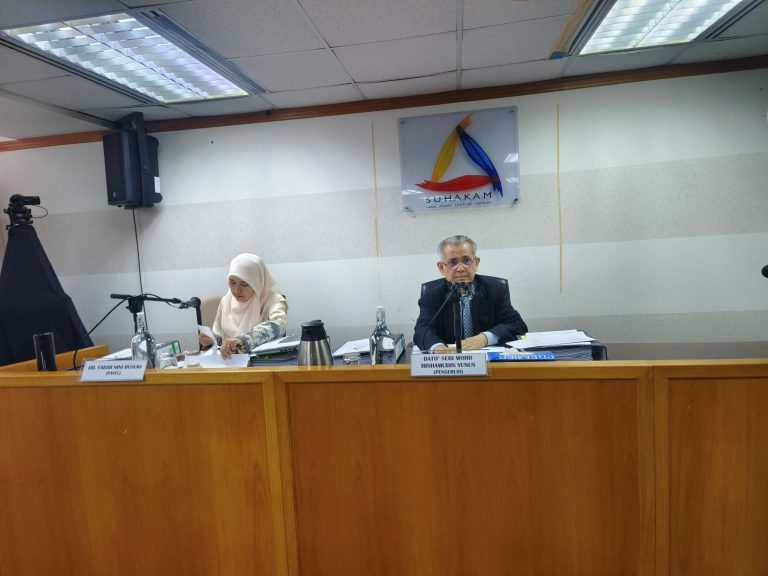
Testifying before inquiry panel chairman Datuk Seri Mohd Hishamudin Md Yunus and panel member Dr Farah Nini Dusuki, Fayrouz said the officers had been out of control due to a lack of leadership.
Previously with the Prisons Department’s security division, his testimony was based on closed-circuit television (CCTV) footage of the Jan 17 incident shown to him.
Farah Nini: Before someone becomes a director, shouldn’t there be a proper process in place? One that considers the need for a specific kind of character, whether through an interview or evaluation. We can already see that the new (Taiping Prison) director has a commanding presence. He clearly commands respect from both staff and inmates, which is an important quality.
Fayrouz: I agree that the selection process should take into account not just the image of leadership, but also the prestige and decisiveness expected of a commanding officer. Decisions should not be made lightly or based on guesswork.
Farah Nini: We feel management is not taking this incident seriously enough, especially regarding humanitarian aspects, including things we would never allow children to do. The response suggested the matter was not being treated with sufficient seriousness. Why is that?
Fayrouz: I believe it is important. The image of the department, the (Home) ministry, and individuals involved matters, and it should be taken seriously.
Fayrouz: Our officers’ attitudes (based on the CCTV footage) suggest a lack of training. There needs to be better clarity on what to do and how to respond in such situations.
Mohd Hishamudin: Do you agree that this incident is extremely embarrassing for the Prisons Department?
Fayrouz: Yes, I agree. It should never have happened.
Asked by Suhakam’s assisting inquiry officer Abdul Rahman Abdullah if the officers dared act that way because they believed there would be no consequences, Fayrouz replied: “I don’t think that was the reason. But there was clearly a failure somewhere.”
Abdul Rahman: In your opinion, why did the officers and personnel have the audacity to behave this way, even though they were fully aware that senior officers were present and CCTV cameras were operating?
Fayrouz: As leaders, we must maintain control, even in the face of provocation. Professionalism is key. It’s not just about saying there will be action, it’s about setting the right example.
Mohd Hishamudin: The level of brutality during the incident is truly shocking. Even the deputy director was present and yet did nothing. The officers acted without fear, shame, or regard. It was as if they thought they were free to behave however they liked. Why has it come to this?
Fayrouz: Perhaps it was a loss of emotional control. Everyone has a role – the deputy, the officers – but stepping on someone should never happen. I see this as a reflection of weak leadership in Taiping Prison. We need to reflect on this seriously. There is a clear need for both physical and spiritual training.
Fayrouz said steps were being taken to educate prison officers on their responsibilities. However, he had yet to set foot in Taiping Prison since assuming his post in July.
The inquiry at Suhakam’s headquarters in Kuala Lumpur continues next week.


