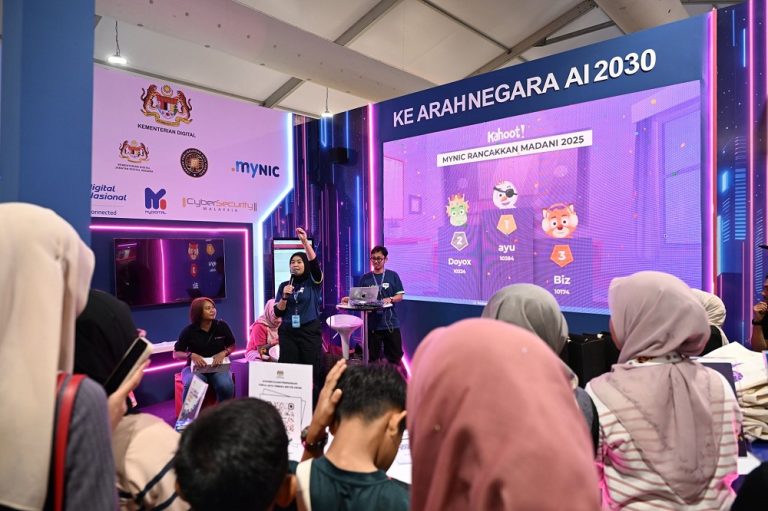
KUALA LUMPUR: Malaysia’s digital transformation efforts gathered pace in the first three months of 2026, as the Digital Ministry advanced a series of initiatives centred on artificial intelligence (AI), data governance and public sector innovation.
The developments reflect a shift from policy design to early implementation, with several programmes now moving into operational phases across government.
A key focus for the ministry has been the rollout of the Government Innovation Initiative (GII), a platform aimed at embedding AI-driven solutions across the public sector.
Introduced earlier this year and gaining traction in recent weeks, the initiative seeks to connect government agencies with technology providers through mechanisms such as Citizen Labs – collaborative environments designed to address specific service delivery challenges.
The ministry has framed the GII as a way to streamline innovation efforts and accelerate adoption of emerging technologies within government systems. It also aligns with Malaysia’s longer-term goal of positioning itself as an AI-driven economy by the end of the decade.
Parallel to its AI push, the ministry has continued to develop policies aimed at improving data utilisation across the public sector.
Among these is a framework to support digital automation and technological advancement, intended to enhance how government agencies collect, share and analyse data. The initiative complements ongoing plans for a National Data Bank, which would serve as a centralised platform for data integration across ministries.
Officials have emphasised that stronger data infrastructure is essential to supporting AI deployment, particularly in areas such as public service delivery and policy planning.
March also saw continued work on Malaysia’s proposed AI governance framework, which is expected to underpin future legislation.
The framework is intended to establish standards for the development and deployment of AI technologies, addressing issues such as accountability, compliance and risk management. Areas of concern include the misuse of AI-generated content, including deepfakes and misinformation.
While details of the legislation are still being refined, the ministry has indicated that it aims to introduce a comprehensive regulatory approach that balances innovation with safeguards.
The ministry’s initiatives form part of a wider policy landscape shaped by the 13th Malaysia Plan, which identifies digital transformation as a key driver of economic growth.
Programmes under this umbrella include efforts to upskill the civil service in digital competencies, as well as incentives to encourage adoption of AI and digital technologies within industry. This includes the nationwide rollout of the Rakan Tani initiative – a homegrown AI co-pilot that delivers real-time, personalised farming advice to padi farmers via WhatsApp.
Agencies under the Digital Ministry such as the Malaysia Digital Economy Corporation continue to play a role in supporting these efforts through grants and ecosystem development.
Activity in the early part of this year suggests the ministry is entering a phase focused on execution, with multiple initiatives progressing simultaneously.
While many programmes remain in early stages, the emphasis has shifted towards deployment and coordination across government.
As these initiatives evolve, attention is likely to centre on how effectively they translate into improved public services and broader economic outcomes – key indicators of Malaysia’s digital transformation progress.